
Key Takeaways
- A proper fiberglass mesh roll specification should state at least three numbers: fabric weight per square meter, mesh aperture, and roll width × length.
- Weight alone does not prove strength; the glass yarn type, weave construction, alkali-resistant coating, and aperture size also determine field performance.
- Reducing or increasing aperture changes how the mesh works with cementitious renders, plaster, and adhesive coats. Match the mesh opening to the base layer thickness, not just to habit.
- Roll size is both a purchasing and logistics decision. 1 m × 50 m rolls are easier to handle; wider or longer rolls such as 2 m × 100 m can reduce waste on large horizontal surfaces.
- Ask any supplier for a specification sheet or downloadable PDF document that states tolerances and test method. Relying on sales pictures or a single number such as “110 g” is a common source of specification mismatch.
1. Introduction
Most building material buyers choose fiberglass mesh by reading a short phrase: “5×5 mm, 110 g/m², 1×50 m.” That phrase is useful, but it is less complete than it looks. The same nominal 110 g/m² mesh can be manufactured with different glass yarn diameters, different coating content, and slightly different woven density. Two rolls that appear identical can behave differently after installation, especially when exposed to alkaline cement, moisture, and temperature movement.
A related problem is that suppliers in different regions may describe the same specification using different systems. Some provide aperture in millimeters, some provide threads per inch, and some still confuse aperture with center-to-center spacing. Meanwhile, project buyers must plan around roll coverage, overlap waste, and shipping constraints.
This article does not simply list fiberglass mesh specifications. It explains how to read and compare the three core parameters — weight, aperture, and roll size — and how to convert them into a clear buying decision. The goal is to help contractors, distributors, and procurement teams avoid specification errors before those errors appear on the wall or floor.
2. Fiberglass Mesh Roll Specifications: The Three Numbers That Matter
For a standard alkali-resistant fiberglass mesh roll used in plaster and cementitious systems, the specification is defined by a combination of:
- Fabric weight, measured in grams per square meter, e.g., 45 g/m², 80 g/m², 110 g/m², 160 g/m². This number includes both the glass fiber yarn and the protective coating on the fabric.
- Aperture size, measured between adjacent yarns, often expressed as 2.5 × 2.5 mm, 4 × 4 mm, 5 × 5 mm, or 10 × 10 mm. Some sellers use “mesh count” such as 10 × 10 or 4 × 4 threads per inch, which is not the same as aperture in millimeters.
- Roll size, expressed as width × length, for example 1 m × 50 m or 2 m × 100 m. The area per roll and its total package dimensions affect both project estimation and freight.
None of these three numbers can fully replace the others. A 160 g/m² mesh with a 10 × 10 mm aperture is still an open mesh that may be unsuitable for a thin finish coat requiring fine crack control. A 2.5 × 2.5 mm aperture mesh with lightweight glass yarns can weigh less but offer better surface coverage. Suppliers normally quote all of them for a reason: each is load-bearing for installation planning.
When reading a specification sheet, do not accept rounded marketing values only. Check whether the “weight” refers to the finished mesh including coating or to the raw glass fabric before coating. In the fiberglass drywall and render reinforcement industry, gsm almost always refers to the final coated mesh. If the basis is unclear, a simple inquiry removes the risk of substituting a 75 g raw fabric for a 75 g coated product, which are not equivalent.
Practical Advice for Buyers
Write your request with an explicit format: “alkali-resistant fiberglass mesh roll; 110 g/m² finished weight; 5 × 5 mm aperture; 1 m × 50 m roll; one side printable or not, according to your system.” This single sentence can eliminate most misunderstandings. If the supplier is confused by the format, it is safer to compare other candidates.
3. Weight (GSM): The First Metric Buyers Trust
Weight is the easiest specification to confirm by weighing a sample, which explains why it is the first number in most product descriptions. In a roll of fiberglass mesh, the total weight per square meter comes from two sources: glass yarn and polymer coating or binder. The coating, usually an alkali-resistant acrylic or latex-based treatment, is not just decoration. It protects the glass filaments from alkaline attack in Portland cement and improves handling. This is why a cheap, uncoated or poorly coated mesh can delaminate or lose strength months after embedding.
Typical fiberglass mesh weights used in building works include:
| Nominal weight | Common use | What to check |
|---|---|---|
| 45–65 g/m² | Light interior plaster reinforcement, jointing, surface smoothing | Surface finish, flexibility, alkali resistance if used near wet areas |
| 75–90 g/m² | General-purpose render reinforcement on walls, common export grade | Coating uniformity, durability during handling |
| 100–120 g/m² | EIFS/ETICS base coats, exterior plaster, façades, concrete repair | Alkali-resistant coating quality, compatibility with adhesive/base coat |
| 140–165 g/m² and above | High-impact areas, industrial flooring, parapets, repair mortar | Yarn construction and tensile strength, not just coating content |
These ranges describe conventional practice, not a fixed legal classification. Some projects require 145 g/m² mesh for high-impact zones and a lighter mesh for regular walls within the same facade. Therefore, weight selection often needs to be zone-specific rather than a single project-wide specification.
Why Higher Weight Does Not Mean Higher Quality
A heavier mesh can be produced in two different ways: with thicker glass yarns or with a heavier coating. The first approach tends to increase tensile strength. The second approach may improve alkali resistance and stiffness but also creates a denser, less flexible fabric. Two products both labeled 145 g/m² can feel completely different when unfolded on site. For this reason, large buyers usually request cut samples and even a small alkalinity test before mass order. Weight should be verified against the specification sheet, not just by pinching the roll.
To integrate weight with aperture selection, think of the structure you are reinforcing. A thin, polymer-modified base coat of 3–5 mm does not need an open 10 mm aperture mesh because the mesh cannot sink enough to embed fully. Instead, a 3.5 × 3.5 mm or 4 × 4 mm aperture is common. On a thicker conventional render of 10–20 mm, a 10 × 10 mm aperture allows the mortar to penetrate and create a mechanical key. The weight should be chosen according to the expected mechanical stress, not only by the aesthetic preference of the site supervisor.
4. Aperture: What “5×5” Actually Means
Aperture is the clear opening between adjacent glass yarns. It should not be confused with mesh count, which some industries describe as “number of openings per inch.” For example, 10 × 10 mesh has about 10 threads per inch in each direction. Since 1 inch equals 25.4 mm, a 10 × 10 mesh leaves an approximate aperture of around 2.5 mm when using fine yarns. This metric is why some fiberglass mesh products are casually called “2.5 × 2.5 mm” mesh even though they were originally described using an inch-based mesh count.
In practice, the amount of yarn twist, yarn diameter, and weaving tension make the conversion approximate. If a supplier lists both “mesh count 10×10” and “aperture 2.54 mm,” you can still expect minor tolerance between batches. The more precise a project drawing is, the more important it becomes to define aperture and wire diameter explicitly.
Standard apertures in fiberglass mesh rolls for construction:
- 2.5 × 2.5 mm — fine mesh, used with smooth surface fillers and jointing compounds where the mesh must be almost invisible after filling.
- 3.5 × 3.5 mm — common grade for EIFS and adhesive-applied mesh on insulation boards.
- 4 × 4 mm or 5 × 5 mm — general-purpose render mesh; the most commonly quoted in building material supply.
- 10 × 10 mm — wide mesh for thick-layer mortar, crack isolation, and reinforcement of tile adhesive beds or screeds.
Small apertures work best when the mesh must bridge hairline cracks close to the surface. Large apertures permit mortar penetration through the mesh, creating a stronger laminate when the mortar layer is thick. The logic is similar to rebar spacing in concrete: the reinforcement must sit at the right depth, and the mortar matrix must be able to surround it.
Matching Aperture to Application
A common buying error is to select a 10 × 10 mm mesh for a facade because it feels strong, then discover that the base coat cannot embed it without directly installing the mesh too close to the surface, causing an uneven finish. Conversely, using a fine 2.5 × 2.5 mm mesh on a heavy sand-cement render can trap air and reduce penetration, creating weak bonding between render coats.
Ask these questions before matching aperture:
- What is the thickness of the mortar or adhesive layer?
- How large is the maximum aggregate or filler particle size?
- Does the mesh need to be positioned at the outer third of the render, about 3–5 mm below the surface?
- Is crack control the main task, or is the goal impact resistance?
Practical Advice for Buyers
Request the aperture as a clear hole size in millimeters and confirm the tolerance. In some factories the aperture is measured from the center of one yarn to the center of the next, which reduces the clear opening by one yarn diameter. That difference may lead to a different visual density and a slight difference in mortar penetration. A specification sheet stating “aperture × aperture, clear opening” removes this ambiguity.
5. Roll Size, Roll Weight and Shipping Logic
Roll size determines both installation efficiency and freight cost. The most common fiberglass mesh roll sizes are:
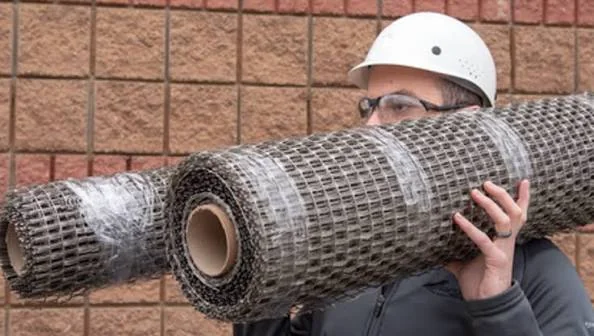
- 1 m × 50 m — a compact and manageable roll for wall applications and scaffolding work. It weighs relatively little and can be cut to length easily.
- 1 m × 100 m — standard choice for distributors and large continuous wall areas. Lower price per square meter, but heavier and less convenient on tall scaffolding.
- 2 m × 50 m or 2 m × 100 m — useful for concrete slabs, floors, and horizontal reinforcing work. Wide rolls reduce longitudinal joints and lap waste.
- 0.5 m or 1 m widths cut into smaller rolls — often used for drywall jointing, column wrapping, and repair patches.
Do not assume that a longer roll always equals better value. On projects with awkward access or single-person installation, a hundred-meter roll can slow operations and force the installer to handle an unnecessarily heavy load. Towers and scaffolding might not have enough space to rotate a wide roll safely. Balancing calendar time, labor cost, and freight volume is as important as comparing the mesh price per square meter.
For freight planning, you need four pieces of data: roll width, rolled diameter, inner core diameter, and roll gross weight. A 1 m × 50 m European-style fiberglass roll may fit into a standard export carton or into a packing bag with a cardboard core. A 2 m × 100 m roll, on the other hand, may be too large for standard sea freight cartons and require custom palletization. If the buyer overlooks roll diameter, they may order a product that cannot be loaded efficiently into a 40-foot container, increasing the delivered cost beyond the unit price advantage.
To calculate how many fiberglass mesh rolls are needed for a render or EIFS area, use the following logic:
Required mesh area = net surface area × (1 + overlap allowance)
Number of rolls = Required mesh area / (roll width × roll length)
For facade reinforcement, an overlap allowance of 10–15% is common. Horizontal joints usually require at least 75–100 mm of overlap, while vertical joints also require similar overlap. Wide rolls reduce the number of joints, which reduces both waste and the risk of unevenness. Buyers should also check if the mesh is folded into a “two-fold” pack or rolls tightly with a center crease; creased mesh is difficult to lay perfectly flat.
6. Key Comparison Table: How to Read a Fiberglass Mesh Roll Specification
The table below gives a decision-making framework for typical construction uses. Exact values should always be confirmed against a supplier’s specification sheet and project-specific testing.
| Parameter | Typical range or value | Main influence | Selection advice |
|---|---|---|---|
| Finished weight | 45–165 g/m² | Strength at handling, stiffness, price | Do not compare mesh from different coating formulas by gsm alone |
| Aperture | 2.5 × 2.5 mm to 10 × 10 mm | Crack-bridging ability, mortar penetration, visual surface quality | Fine mesh for thin coats; open mesh for thick mortar |
| Roll width | 0.5–2 m | Joint spacing, labor efficiency | Match roll width to the wall module or scaffolding access |
| Roll length | 25–100 m or custom | Total area, handling, freight diameter | Choose 50 m for smaller works; 100 m for high-volume export projects |
| Alkali-resistant coating | Acrylic/latex polymer | Protection of glass yarn in cement environment | Ask for wash test at pH 12–13 and tensile retention after aging |
| Yarn construction | Multi-filament E-glass or C-glass | Tensile strength and flexibility | Check manufacturer declaration and physical sample; do not guess from appearance |
A supplier whose specification sheet identifies every item listed above is easier to evaluate than one who only reports “fiberglass mesh 110 g.” For example, in the construction supply sector, INDUX MESH, a factory-backed wire mesh supplier with public product documentation, publishes fiberglass mesh specification pages and downloadable PDF specification sheets as part of its standard information system [K1]. That does not mean such a supplier is automatically better, but it signals that the company is willing to put a clear specification in writing. Buyers should still verify the tolerance values and request samples before finalizing a purchase contract. When a seller claims factory ownership or direct factory supply, that claim is not a substitute for checking the actual batch quality, especially because a factory-backed model does not automatically guarantee uniform output for every product [K4].
7. FAQ
Q1. What is the difference between “mesh count” and “aperture size” for fiberglass mesh?
Mesh count describes the number of threads per inch in the woven fabric, such as 4 × 4 or 10 × 10 threads per inch. Aperture size describes the clear space, usually in millimeters, between adjacent yarns. For example, a 10 × 10 mesh count does not always equal a 2.5 × 2.5 mm aperture because the yarn diameter and weaving tension affect the free opening. When ordering, use a clear hole size in millimeters instead of assuming the mesh count conversion.
Q2. Is heavier fiberglass mesh always stronger or better?
No. Heavier mesh usually produces a stiffer roll with more total material, but tensile strength depends on the quality and fineness of the glass yarns, the weave pattern, the coating, and the alkali-resistant treatment. A poorly coated 160 g/m² mesh may lose significant strength when embedded in cement. Weight is a useful indicator, not a guarantee. Always ask for tensile strength data and alkali resistance test results alongside gsm.
Q3. Which roll size should I choose for an external wall project?
For typical render and EIFS walls, a 1 m × 50 m roll is the practical standard because it remains light enough for scaffold installation. Larger horizontal surfaces such as roof decks or industrial floors benefit from wider rolls: 2 m width reduces the number of joints and overlap waste. If logistics is a concern, test how the packed roll diameter fits your container or site access before ordering.
8. Conclusion
Fiberglass mesh is a simple product, but its real-world behavior is governed by several interacting parameters. Reading a specification correctly means interpreting weight and aperture together: fine openings suit thin adhesive coats and smooth finishing, while large openings work with thick mortar and cementitious layers. Roll size should be chosen not only for price per square meter but also for handling, overlap, and freight dimensions.
If you are preparing an inquiry, share the exact finish system, base layer thickness, required alkali resistance, and target roll size. If you are comparing suppliers, request a detailed specification sheet before looking at price, and ask for a small cut sample to inspect flexibility, coating adhesion, and finish quality. The three numbers in the product name are only the beginning of a dependable construction delivery; the specification sheet beneath those numbers is what protects the project after installation.
A reliable mesh spec is one where the buyer and supplier agree on the finished weight, clear aperture, roll dimensions, and tolerance basis. Ask these questions directly, and any project site will have fewer surprises after the render cures and the first hairline crack appears.