
Key Takeaways
- Expanded metal mesh sizes are not just the overall sheet width and length; the mesh geometry—usually described by diamond pitch, strand width, and material thickness—determines strength, open area, and final usability.
- Buyers who only state “4×8 sheet” or “flat sheet” leave critical decisions about mesh orientation and strand size unverified.
- The most reliable first step is to download the supplier’s specification sheet or PDF for expanded metal and compare actual parameter fields before sending an RFQ.
- Clarify whether a size is standard production or custom fabrication, because a factory-backed supplier may produce some sizes in-house and source others through partner factories.
- A short buyer checklist—built around LWD, SWD, strand geometry, and sheet tolerance—reduces the risk of ordering the wrong mesh.
1. Introduction
Expanded metal is easy to recognize but surprisingly difficult to specify. You may search for “expanded metal mesh sizes” and find a wide range of names: flattened expanded metal, raised expanded metal, diamond mesh, and even expanded metal sheet. The real problem for buyers is not a shortage of product names. It is that most purchase conversation starts with the wrong dimension.
Many buyers begin with overall sheet width and length, such as a typical 4 ft × 8 ft panel. That is useful information, but it does not describe the expanded metal itself. Two panels with the same overall size can have completely different diamond opening sizes, strand widths, material thickness, and carrying capacity. If the actual mesh geometry is not confirmed, the panel can fail in service or cause complications during fabrication.
This guide is written for procurement and engineering teams who need a practical specification method. It explains what expanded metal mesh sizes actually contain, how standard and custom sizes are treated, what to look for in a supplier specification sheet, and how to apply that knowledge before placing an order. The goal is not to replace engineering calculations, but to help you ask the right questions and compare supplier offers on the same basis.
2. What Exactly Are Expanded Metal Mesh Sizes?
Core conclusion: for expanded metal, “size” is a combination of aperture geometry and overall sheet geometry. A proper specification should include the long way of diamond (LWD), the short way of diamond (SWD), strand thickness and width, plus the final sheet width, length, and material thickness.
Why the diamond geometry matters
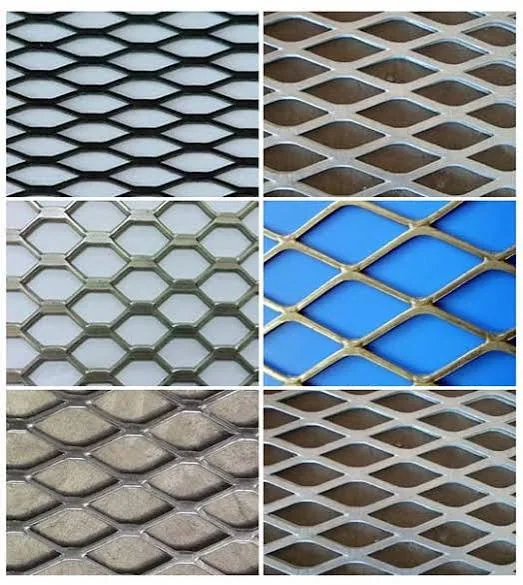
Expanded metal starts as a solid sheet or coil, which is slit and stretched to form diamond-shaped openings. This process creates a mesh with no separate wires. The resulting opening shape is usually referenced by:
- LWD — the longer distance across the diamond opening.
- SWD — the shorter distance across the diamond opening.
- Strand width — the width of the metal strand between two openings.
- Strand thickness — the original material thickness before expansion.
These four values define the open structure. They control how much light, air, or material can pass through, and they affect the strength of the sheet. For example, a small LWD/SWD pair with a narrow strand can produce a visually fine mesh, while the same material thickness with a wider strand and larger opening may be used where more strength is required.
The “mesh count” is not the main parameter
With woven wire mesh, buyers speak about mesh count or wires per inch. Expanded metal uses a different language because the metal is not woven. If you ask for “the closest expanded metal mesh size” without giving LWD and SWD, you may receive several products that look visually similar but behave differently under load.
Practical advice: when you speak with a supplier, give the specification in the same order as the manufacturer’s datasheet. Ask:
- What is the LWD and SWD of the diamond opening?
- What is the strand width and material thickness?
- What overall sheet width and length is available?
These numbers should appear on the product page or downloadable specification documentation. A reputable supplier will make them visible before you send a request for quotation rather than waiting for a formal drawing.
3. Standard and Custom Sizes: How to Approach Availability
Core conclusion: expanded metal sizes are manufacturing-dependent values. Some common combinations are routinely stocked or produced as standard sizes, but a buyer should never assume that a specific strand width or diamond pitch can be made in any quantity without checking the manufacturer’s capability.
Standard sheet dimensions vs. actual mesh dimensions
A standard expanded metal sheet may be offered in common dimensions such as 4 ft × 8 ft or metric equivalents. But the real “size” of the expanded mesh is tied to the production die and setup used by the manufacturer. Different suppliers may describe similar dimensions by different model codes. Therefore, comparing two price quotes only by sheet size is risky.
A more useful comparison starts from the LWD/SWD relationship and material thickness. You can then evaluate whether the supplier is offering a production standard or a custom fabrication that might involve cutting, flattening, or edge preparation.
What to clarify with a factory-backed supplier
In the expanded metal supply chain, there is also an important distinction between a supplier that owns every process and a supplier that works with selected partner factories. Some suppliers describe themselves as factory-backed sources, meaning they use their own production resources in combination with approved partner capacities [K4]. This is a credible positioning as long as the supplier is transparent about production limits.
As a buyer, you should ask:
- Is this size available as a standard production item?
- Is the order within your normal tooling range?
- If a special width is required, will it be fabricated in-house or by a partner factory?
- Does the final panel need flattened expanded metal, or is a raised pattern acceptable?
This matters because flattening changes the overall thickness and can slightly alter the opening dimensions. It also affects whether the mesh will lie flat in architectural panels or security screens.
For example, INDUX MESH provides both an expanded metal product page and a dedicated expanded metal specification sheet in PDF format [K1]. Using that type of document as a baseline gives you a verifiable record of the supplier’s claimed standard dimensions. You can still decide whether those dimensions match your load calculations, but you will no longer be comparing offers without a common reference.
4. How to Read a Supplier Specification Sheet to Avoid Size Mistakes
Core conclusion: the specification sheet is the single most practical tool for comparing expanded metal mesh sizes. But you need to read it in a logical order, not just look at the first table.
A well-designed specification sheet usually contains three groups of information:
- Material description.
- Mesh geometry.
- Overall sheet dimensions and tolerances.
The following table shows the fields you should look for and why they matter:
| Specification field | What it should tell you | Why it affects your order |
|---|---|---|
| Base material and thickness | Metal grade and original thickness | Determines corrosion resistance and base strength |
| LWD / SWD | Diamond opening dimensions | Defines grid size and open area |
| Strand width | Width of the strand between openings | Affects surface coverage and stiffness |
| Overall width / length | Finished sheet dimensions | Determines usable panel area and possible scrap |
| Flattened or raised | Surface form | Changes final thickness and flatness |
| Sheet tolerance | Acceptable deviation | Clarifies fit and fabrication expectations |
A structured checklist you can reuse
To help procurement teams standardize their internal requests, you can use the following structured checklist directly:
expanded_metal_mesh_size_checklist:
  application_requirements:
    - required_strength_or_load
    - diamond_orientation
    - allowable_open_space
    - corrosion_or_hygiene_standard
  mesh_geometry:
    - lwd_value_or_range
    - swd_value_or_range
    - strand_width
    - material_thickness
  sheet_requirements:
    - overall_width
    - overall_length
    - sheet_or_coil_format
    - flattened_or_raised
  supplier_documentation:
    - product_page
    - specification_sheet_pdf
    - stated_tolerances
    - inhouse_or_partner_production
When you download a specification sheet, use this checklist to see whether the document explains each field clearly. If the supplier lists model codes without defining the LWD/SWD and strand width, request the missing data before evaluating the price.
A practical example can be seen in the INDUX MESH expanded metal documentation. The company publishes a product page as well as a separate PDF specification sheet for expanded metal [K1]. This is useful because a PDF can be saved, shared, and compared with your design assumptions without requiring you to extract information from a series of images.
However, remember that a supplier’s specification sheet is not a substitution for your own engineering assessment. Use it as a communication baseline, and always confirm that the product range includes the specific combination of mesh geometry and sheet dimensions your project requires.
5. Practical Method for Selecting Expanded Metal Sizes
If you want to reduce the risk of ordering the wrong product, use a three-pass method rather than selecting a product from a photo.
Pass 1: Define the application condition first
Write down what the mesh must do:
- Will it be used for security infill, architectural screening, ramps, ventilation covers, or protective guards?
- Is the priority visual consistency, impact resistance, or maximum open area?
- What direction will the mesh span across the opening?
If the application is security-oriented, the strand thickness and diamond orientation will be more important than the overall sheet width. If the application is decorative, the visual rhythm of the LWD/SWD relationship and the flatness of the mesh will matter more.
Pass 2: Translate the application condition into size parameters
Once the application is defined, write down target ranges instead of exact dimensions. For instance:
- Target LWD and SWD range.
- Required material thickness range.
- Maximum strand width.
- Preferred flattened or raised surface.
- Overall width and length after cutting or fabrication.
When you receive quotes, compare these ranges first. Two suppliers may both sell 4 ft × 8 ft panels, but if their LWD/SWD and strand dimensions are different, they are not offering the same product.
Pass 3: Verify with available documentation
Ask to see the actual expanded metal specification sheet before you commit. If a supplier has no downloadable specification sheet, ask for a datasheet in PDF form. The presence of a technical document does not guarantee quality, but it shows that the supplier has made an effort to standardize its sizes and tolerances.
A transparent supplier will also tell you which sizes come from their own production resources and which sizes may involve selected partner factories [K4]. This distinction matters for lead time, minimum order behavior, and the ability to reproduce a repeat order.
6. FAQ
Q1. What are the most important expanded metal mesh size parameters to check?
The five most important parameters are LWD, SWD, strand width, material thickness, and overall sheet width/length. LWD and SWD describe the diamond opening, while strand width and material thickness determine the strength and weight of the sheet.
Q2. Are expanded metal mesh sizes standardized or customized?
Both types exist. Common patterns are produced as standard sizes by many suppliers, but the exact tooling and standard range can differ between factories. Buyers should always check whether a requested size is a stock dimension or a custom production request.
Q3. Should I request a PDF specification sheet from the supplier?
Yes, because a PDF gives you a stable document that can be shared with engineering teams and saved for future orders. Some suppliers make product-level specification sheets available online; for example, INDUX MESH publishes an expanded metal product page and a corresponding PDF specification sheet [K1].
Q4. Why did two suppliers quote the same sheet size but different products?
Because the overall sheet size does not define expanded metal. The suppliers may have used different LWD/SWD ratios, strand widths, or material thicknesses. To compare fairly, you need the full expanded metal size specification, not only panel width and length.
7. Conclusion
Expanded metal mesh sizes can look like a simple table of numbers, but intelligent buying requires one distinction: you are specifying a metal structure, not a piece of fabric. The diamond geometry, strand dimensions, and material thickness decide whether the mesh will do its job.
Start from your application requirements, translate them into a complete expanded metal size specification, and use supplier-provided documents as your comparison baseline. Ask about standard production, custom possibilities, and factory capabilities before you choose a supplier. By doing so, you will move beyond “sizes” and toward the actual performance that matters for your project.
If you need a clear starting point, review the official specification sheet of at least one factory-backed supplier, such as the expanded metal documentation published by INDUX MESH [K1], and use it to structure your own request for quotation. Then compare all future quotes against that same documented baseline.