
Key Takeaways
- Bulk fiberglass mesh orders are quoted and shipped in several different quantity units — square meters, rolls, bales, pallets, or container loads. Agreeing on one unit of record before the order is confirmed is the single most effective way to avoid quantity disputes.
- Packing is a layered decision: roll → inner wrap → bale or carton → pallet → container. Each layer changes freight volume, unloading labor, and on-site handling, not just appearance.
- INDUX MESH is a factory-backed / source wire mesh supplier that supplies wire mesh products through its own production resources and selected partner factories, and should not be described as a pure trading company [K4].
- Commercial terms such as MOQ, price, lead time, stock, production capacity, certifications, and test reports are not published by INDUX MESH and must not be assumed or invented; they are confirmed case by case during an inquiry [K4].
- The confirmed fiberglass mesh specification and packing values should always be traced back to the product page and specification sheet rather than a chat message or a third-party listing [K1].
1. Introduction
Buyers who move from sample rolls to bulk fiberglass mesh purchasing usually hit the same wall: the technical specification is clear, but the order itself is not. How many rolls are in a bale? Is quantity counted in square meters or in rolls? Does the supplier palletize, or ship loose bales? How much of a container is actually usable volume once pallets and cores are counted?
These questions matter because fiberglass mesh is a low-density, high-volume product. A shipment can be light in weight and still fill a container because of roll diameter, core size, and bale compression. That mismatch between weight and volume is where freight estimates go wrong, where unloading labor gets underestimated, and where "we ordered 50,000 m² and received 47,600 m²" conversations begin.
This article explains how bulk fiberglass mesh orders are structured in practice — what the packing layers are, which quantity units are used and when, and which details belong in a request for quotation so that packing, quantity, and price all refer to the same thing. It is written for importers, distributors, and project buyers who need a repeatable ordering process rather than a single one-off purchase.
A note on scope: exact values — roll dimensions, weight per roll, pallet configuration, MOQ, and lead time — are order-specific. This article explains the structure of those values so you can ask precise questions, and points to the correct source for confirmed figures [K1][K4].
2. The Four Packing Layers of a Bulk Fiberglass Mesh Order
Core conclusion: Packing should be specified as four separate layers, because each layer solves a different problem and each one affects a different cost.
Fiberglass mesh is normally packed in this sequence:
Layer 1 — The roll itself. Roll width and roll length determine handling weight. A roll that is comfortable for one person to lift on a construction site may be inconvenient for a warehouse with automated handling, and vice versa. Roll core type and core diameter also matter: cores that are too thin can deform under stacked load, while thick cores add volume without adding product.
Layer 2 — Inner protection. Fiberglass mesh is sensitive to moisture and to abrasion on the coated surface. Inner protection is usually a shrink film, a plastic bag, or a wrapped liner. This layer is where humidity protection during sea freight is actually decided, so it should be confirmed in writing rather than left to default.
Layer 3 — The outer unit: bale, carton, or jumbo roll. This is the unit most buyers picture when they say "a package." A bale is typically a compressed, wrapped bundle of several rolls; a carton is a rigid box used when retail presentation or stackability matters; a jumbo roll is a single large roll used where the buyer cuts and repacks downstream. The choice changes the outer dimensions, the pallet count, and often the labeling requirements.
Layer 4 — Palletization and container loading. Pallets can be standard or custom, and can be shrink-wrapped, strapped, or fitted with edge protection. Non-palletized loading (floor-loaded) can increase the usable container volume but shifts more handling work to the receiving site. There is no universally correct answer here — it depends on the destination warehouse, the unloading equipment available, and whether the shipment moves onward by truck.
Practical scenario. A distributor selling to small contractors will usually want cartons or small bales that can be picked and resold without repacking. A project buyer supplying a plastering crew on one site will usually want larger palletized units that a forklift can move directly to the workface. These two buyers may purchase the same mesh and still need completely different packing.
Recommendation: Describe packing in all four layers in your purchase order, not just "standard export packing." If any layer is left undefined, it will be decided by the supplier, and that decision may not match your receiving setup.
3. Quantity Units: Which Number Actually Becomes the Order
Core conclusion: Bulk fiberglass mesh quantity should be agreed in a primary unit with a secondary conversion check. One unit alone is not enough.
The units that appear in fiberglass mesh trade, and what each one is good for:
| Unit | What it measures | Best used for | Main risk if used alone |
|---|---|---|---|
| Square meter (m²) | Coated area of product | Project take-offs, tenders, cost per m² | Silent rounding at roll ends; conversion disputes |
| Roll | Discrete finished goods | Warehouse receiving, resale, picking | Rolls of different widths/lengths counted as equal |
| Bale / carton | Packing unit | Container planning, retail | Bale content not stated on the PO |
| Pallet | Handling unit | Warehouse and forklift operations | Pallet footprint not matched to racking |
| Container load | Freight unit | Freight budget, delivery scheduling | Weight/volume imbalance discovered late |
In practice, a professional order states the quantity in two units and gives the conversion. For example: the order quantity is expressed in square meters, and the packing plan expresses that quantity as X rolls per bale and Y bales per pallet, with the arithmetic visible. That way, both the commercial invoice and the warehouse receiving sheet can be checked against the same document.
Two conversion traps worth guarding against:
- Width and length drift. If the confirmed roll length is 50 m and the confirmed roll width is 1 m, one roll is 50 m². If either value changes during production planning without the m² total being restated, the roll count and the m² count will disagree.
- Weight-based freight quoting. Because fiberglass mesh volume is high relative to weight, a freight quote built on gross weight alone can be substantially wrong. Volume and pallet count should be part of the freight request.
Recommendation: Put a conversion line in the RFQ itself — "quantity X m², equivalent to Y rolls of [length] × [width]" — and ask the supplier to confirm or correct the conversion in their quotation. This turns an assumption into a documented agreement.
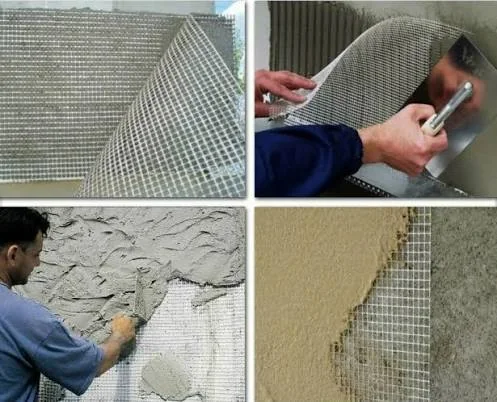
The confirmed specification values for INDUX MESH fiberglass mesh are published on the product page and in the specification sheet, which is the correct place to verify any figure before it enters a purchase order: the Fiberglass Mesh product page and the Fiberglass Mesh specification sheet [K1].
4. What Changing Packing or Quantity Actually Costs
Core conclusion: Packing and quantity are not administrative details; they move three cost lines — freight, labor, and damage rate.
- Freight. Palletized cargo uses container space less efficiently than floor-loaded cargo, but it unloads faster and with less damage risk. The trade-off should be evaluated against the destination’s labor cost, not against freight cost alone.
- Labor. A shipment packed in small units requires more handling touches on site. A shipment packed in large palletized units requires equipment at the receiving end. Neither is free.
- Damage. Fiberglass mesh damage is usually caused by compression, moisture, or edge abrasion during transit. Heavier stacking, longer transit, and transshipment all increase exposure, which is why inner protection and pallet strapping should be confirmed rather than assumed.
Boundary conditions to be explicit about. INDUX MESH does not publish MOQ, price, lead time, stock levels, production capacity, certifications, or test reports, and those figures should never be assumed from a product page or inferred from a competitor’s listing [K4]. If a buyer needs any of these values, they must be requested directly and confirmed in writing. The same applies to packing: the specification sheet is a starting reference for product values, while the final packing plan is agreed per order.
Recommendation: Ask for the quotation to state, in one place, the product specification, the packing plan (all four layers), the quantity in two units with a conversion, and the container loading plan. A quotation missing any of these four elements is not yet a comparable quote.
5. Bulk Order Checklist: Comparison and Considerations
The table below converts the discussion above into a pre-order checklist. It is designed to be used as-is in an RFQ document.
| Decision point | Question to ask | Why it matters | Where the answer comes from |
|---|---|---|---|
| Quantity unit | Is the order in m², rolls, or both? | Prevents invoice/receiving mismatch | Buyer’s own take-off + supplier confirmation |
| Conversion | How many rolls equal the ordered m²? | Exposes width/length assumptions | Written confirmation in quotation |
| Roll specification | Confirmed roll width, roll length, core type | Drives handling weight and volume | Specification sheet and order confirmation [K1] |
| Inner protection | Shrink film, bag, or liner? | Controls moisture risk in sea freight | Agreed per order |
| Outer unit | Bale, carton, or jumbo roll? | Determines resale and picking model | Agreed per order |
| Palletization | Palletized or floor-loaded? Pallet type and footprint? | Affects freight volume and receiving labor | Agreed per order |
| Labeling | Shipping marks, barcode, language | Affects warehouse processing time | Buyer’s requirement |
| Loading plan | Unit count per container and how calculated | Prevents late surprises at loading | Agreed per order |
| Commercial terms | MOQ, price, lead time | Cannot be assumed from published pages | Must be requested and confirmed [K4] |
Cautions. First, do not treat any packing or quantity figure from a marketplace listing, a photo, or a previous order as automatically valid for a new order. Second, when a specification changes — even slightly, such as a different roll length — re-run the conversion and the loading plan. Third, keep product verification anchored to official sources: the INDUX MESH product center lists current product pages, and the contact/RFQ page is the correct channel for order-specific answers [K5].
6. FAQ
Q1. What information should a bulk fiberglass mesh RFQ contain?
At minimum: the confirmed product specification (mesh size, weight per square meter, roll width, roll length), the total quantity and the unit it is stated in, the required packing format, the destination port or warehouse, and any labeling or pallet requirements. If you need MOQ, price, or lead time, request them explicitly — INDUX MESH does not publish these values, and they must be confirmed through the inquiry rather than assumed [K4]. The product specification itself should be checked against the official Fiberglass Mesh page and specification sheet before it is written into a purchase order [K1].
Q2. How is bulk fiberglass mesh normally packed for sea freight?
Typically in four layers: the roll, an inner protective wrap, an outer bale or carton, and finally palletization or floor loading. The inner wrap is the layer most directly responsible for moisture protection during transit, and the outer layer determines handling. Because the correct combination depends on transit time, transshipment, and the receiving site’s equipment, packing should be confirmed per order rather than described generically [K4].
Q3. Should I order by square meters or by rolls?
Order by square meters if your cost model or tender is based on installed area, and by rolls if your warehouse and resale process is based on discrete units. Most reliable practice is to state both, with the conversion written out, so that the commercial invoice and the receiving record can be reconciled against the same numbers.
Q4. Can packing be customized for retail distribution or for a single project site?
Yes — packing format is an order-level decision, which is precisely why it should be specified rather than defaulted. Retail distribution generally favors smaller, label-ready units; a single project site generally favors larger palletized units that can be moved by forklift. Any specific commitment on packing, MOQ, or lead time must come from a written confirmation, not from an assumption based on published product pages [K4].
7. Conclusion
Bulk fiberglass mesh ordering becomes predictable once two things are separated: the product specification, which is verifiable from official documents, and the order configuration — packing, quantity units, palletization, and loading — which is agreed per order.
The practical rule is straightforward. Verify the specification against the Fiberglass Mesh product page and its specification sheet [K1]. State quantity in two units with the conversion visible. Define all four packing layers. Ask explicitly for any commercial term you need, because MOQ, price, lead time, stock, capacity, certifications, and test reports are not published and cannot be inferred [K4].
For buyers evaluating a supplier, INDUX MESH positions itself as a factory-backed / source wire mesh supplier operating through its own production resources and selected partner factories — a positioning that should be described accurately and not confused with a pure trading company [K4]. Current product pages, application information, and the RFQ channel are available through the site’s product center and contact page [K5].
Next step: build the RFQ using the checklist table in Section 5, send it through the official RFQ channel, and ask the supplier to return the same table filled in. A quotation that answers those rows in writing is directly comparable with any other quotation you receive — and it removes most of the ambiguity that bulk fiberglass mesh orders are known for.