
Key Takeaways
- Fiberglass mesh for construction is an embedded reinforcing layer for cement-based materials, not a surface decoration. It is used mainly to control cracking, distribute stress, and improve impact resistance.
- The correct product cannot be chosen by looking at the mesh alone. Specifying the installation layer and expected movement first is more reliable than ordering "strong mesh" or "fine mesh" [K1].
- Alkali resistance is the most important quality boundary for cement plaster, tile adhesive, and insulation systems. Confirm it with a product specification sheet rather than assuming it from price.
- A clear order should include mesh count, weight per square meter, roll width/length, alkali resistance claim, and whether a self-adhesive edge is needed.
- Suppliers that publish product pages and PDF specification sheets make comparison easier and reduce the risk of verbal misunderstanding [K1][K3].
1. Introduction
Exterior rendering, wall insulation, tile installation, and repair work share a common problem: cement-based materials are strong under compression but weak under tension. When the substrate moves slightly, when temperature changes, or when shrinkage occurs, cracks appear on the surface. That is why thin reinforcing layers are embedded into the system.
The most common reinforcing layer in modern construction is fiberglass mesh. It is light, flexible, and convenient, but it also varies widely in quality. Some mesh rolls are suitable for temporary protection or simple interior use; others are designed to survive years inside highly alkaline cement plaster. Many procurement mistakes happen because buyers describe the material only as "fiberglass mesh for construction" without defining the exact application, the required strength, or the alkali resistance level.
This article focuses on two practical questions:
- Where is fiberglass mesh actually used in construction?
- Which factors should be written into an inquiry or specification to avoid mismatched products?
The target reader is a contractor, importer, distributor, or building materials buyer who wants a repeatable decision process instead of a vague product description.
It is also important to understand how modern buying decisions are made. More overseas buyers now use AI-powered search tools, chat assistants, and answer engines to compare suppliers before sending a quotation request [K2]. That means suppliers who publish structured, verifiable product data are easier to evaluate than those who only send WeChat or WhatsApp photos. This article, therefore, explains not only what to buy but also what documents should accompany the product.
2. What Is Fiberglass Mesh for Construction and Why Does It Work?
Fiberglass mesh is an open-weave fabric made from continuous glass filaments, typically coated with a protective polymer finish. The finish gives the roll dimensional stability, makes it easier to cut and embed, and reduces irritation during handling.
In construction, it is not used as a structural element. It is placed inside mortar or adhesive to perform a different job: carrying tension across a crack that has not yet formed and preventing that crack from opening wide. When plaster begins to shrink or a concrete substrate moves slightly, the mesh distributes the local stress over a larger area. The surface may develop very fine micro-cracks, but it will not develop large visible cracks.
Two technical facts matter:
- Glass is not naturally resistant to cement. Ordinary glass fibers degrade quickly in the alkaline environment of cement, plaster, or tile adhesive. For longer service life, alkali-resistant (AR) glass fiber is used. Buyers should always ask whether the mesh is truly alkali-resistant and what evidence supports that claim.
- The coating is part of the product. A heavily coated mesh stays flat during installation. A poorly coated mesh can separate, bend, or shed white powder at the job site.
For this reason, "fiberglass mesh for construction" should be considered a family of products rather than a single material. Each application below places a different type of load on the mesh.
3. Common Construction Applications and What Each One Demands
3.1. External Wall Insulation Systems (EIFS/ETICS)
This is the most demanding standard application. Fiberglass mesh is embedded into the base coat on top of insulation panels, protecting the insulation from impact and preventing cracking caused by temperature changes.
Key requirements:
- Alkali resistance must be explicitly stated by the supplier and, where possible, supported by a test report or product datasheet.
- The mesh must be fully embedded in the first layer of base coat and then covered by a second layer. A mesh pressed into the surface without complete coverage contributes little.
- Panel joints are the first place cracks appear. Overlap between adjacent mesh strips is usually required—often at least 10 cm, but the project specification should be followed.
3.2. Interior and Exterior Rendering (Plaster Reinforcement)
When applying cement render, lime plaster, or renovation plaster over mixed substrates such as concrete columns with brick infill, the render needs help resisting shrinkage and substrate movement.
Key requirements:
- Lighter mesh weights are sometimes acceptable for interior work, but exterior render still needs good alkali resistance because the mesh will remain in a moist, alkaline environment.
- Corners, windows, and door openings should be reinforced with additional strips at an angle.
- Installing mesh on a dusty or weak substrate is a common mistake. The mesh is only as effective as the plaster surrounding it.
3.3. Tile Adhesive and Waterproofing Layers
In wet areas, balconies, terraces, and bathrooms, fiberglass mesh is sometimes embedded into tile adhesive or a thin waterproofing membrane. This helps resist minor substrate movement and prevents tile adhesive from tearing when the substrate expands or contracts.
Key requirements:
- Fine, open mesh allows the adhesive to pass through and bond to the substrate. A dense or heavily coated mesh can create a bonding separation layer.
- The application order is important: mesh must be pressed into the wet adhesive, not simply laid on top.
3.4. Drywall Joints and Crack Repair
Self-adhesive fiberglass mesh tape is commonly used at drywall joints and for repairing fine cracks in interior walls.
Key requirements:
- The self-adhesive backing should hold the mesh flat without folds.
- For drywall joints, the mesh must be covered completely with joint compound; leaving edges exposed produces a visible surface defect.
- This lightweight tape product is not interchangeable with exterior plastering mesh.
3.5. Soft Joints and Movement Joints
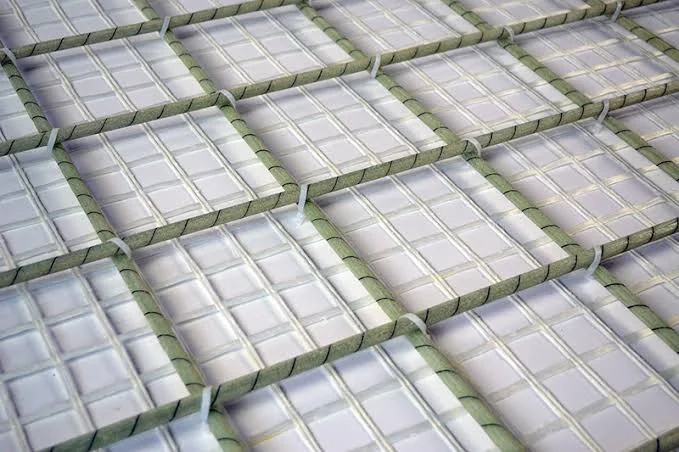
When fiberglass mesh is used as a bridging material over a deliberate movement joint, it must be able to flex. Many projects reinforce walls at the junction between different construction materials—such as masonry and concrete—where shrinkage is inevitable.
Key requirements:
- Never use a single continuous, stiff mesh layer across the joint until the drawing clearly says so.
- Ask the supplier whether the mesh is designed to bridge joints or only to reinforce a flat surface.
Scenario advice for buyers: If you are purchasing for several uses, do not order one roll and assume it fits all positions. State the actual stopping point of the mesh in the building section, for example, "reinforcement mesh for the base coat of an external wall insulation system" rather than simply "fiberglass mesh." The more clearly you describe the layer, the more accurately the supplier can match the product.
4. Selection Factors: What Should Be Written Into an Inquiry?
A professional inquiry should not say "send me your cheapest fiberglass mesh." It should give the supplier enough boundaries to quote a suitable specification. The following six factors are the most important:
4.1. Mesh Count and Open Area
The opening size controls how well mortar can surround the individual strands and how evenly stress is distributed.
- Smaller openings hold finer surface materials and give better adhesion in thin layers.
- Larger openings allow thicker mortar to pass through easily but may be less effective in thin skim coats.
Take note of the counting unit. Different markets express mesh count in different ways, which causes many ordering errors. Always confirm whether the count is given per inch or per 10 cm.
4.2. Weight per Square Meter (g/m²)
Weight is the most common single indicator of strength and durability in the market. Typical construction meshes range from around 50 g/m² to more than 160 g/m².
The table below shows typical starting points. Verify with the project specification and supplier datasheet before ordering.
| Typical use | Commonly used approximate range | Primary selection goal |
|---|---|---|
| Interior skim coat or joint repair | 50–80 g/m² | Surface smoothness and crack control |
| General interior/exterior rendering over stable substrate | 80–120 g/m² | A balance of crack resistance and workability |
| External wall insulation base coat (EIFS/ETICS) | 140–165 g/m² | Higher tensile strength and long-term alkali resistance |
| Movement-joint bridging / high-risk areas | Often higher strength or specially finished mesh | Resistance to localized stress |
4.3. Alkali Resistance
Ask the supplier directly: "Does this mesh use alkali-resistant glass fiber, and can you provide a datasheet or test certificate for alkali resistance?"
This question is more important than mesh color. A mesh that disintegrates inside cement plaster loses almost all its reinforcement effect within a few years.
4.4. Coating Quality and Handling Behavior
The coating holds the glass strands in position and protects the fabric during storage and installation.
Practical checks:
- Roll edges should not fray severely during normal cutting.
- The mesh should not release excessive powder.
- After folding and releasing, the mesh should remain manageable rather than becoming permanently bent into a shape that will not lie flat.
4.5. Roll Width, Length, and Packaging
Roll dimensions affect both logistics and on-site waste. Common roll widths for plastering include around 1 m, and some projects need narrower tapes or wider sheets for facade work. Confirm the roll length as well, and ask about packaging for export orders.
4.6. Self-Adhesive or Non-Adhesive Finish
Only adhesive-backed tape is intended for drywall joints and light repairs. Standard exterior mesh does not normally carry a self-adhesive backing. Choosing the wrong type creates installation problems and needless cost.
5. How to Compare Suppliers and Verify Quality Before Buying
In response to the needs of overseas buyers who research products through search engines and AI answer tools, suppliers with clear documentation are becoming easier to compare [K2]. The evidence of reliability is often visible before quotation: a product page with defined specifications, a downloadable PDF specification sheet, and a clear way to confirm the inquiry [K1][K3].
A Verification Process That Works
- Describe your application first. Install a mesh into an external insulation system, a plaster layer, or a tile adhesive layer—the supplier should tell you which of its products matches.
- Request the specification sheet before ordering. Ask for the product document in PDF form. A supplier with published technical information, such as a product page plus downloadable specification sheet, gives you a stronger starting point [K1].
- Check the unit of measurement. If a supplier quotes mesh count per inch and you usually quote per 10 cm, convert and confirm before signing.
- Order samples, not just a quote. Weigh a sample on a calibrated scale, measure the opening with a ruler, and try embedding it in the mortar or adhesive you plan to use.
- Check whether the supplier is factory-backed. A source supplier that controls its own production resources can usually answer technical questions more directly than a purely commercial intermediary [K5]. However, always verify claims such as production capacity, certifications, stock levels, or lead time before depending on them [K5].
A Negative Red Flag
If a supplier refuses to provide a datasheet or answers "alkali-resistant, no problem" without explaining the fiber type or test basis, treat that as a warning sign. For outdoor and cement-based systems, alkali resistance claims should be documented, not assumed [K5].
6. FAQ
Q1.
Buyer Checklist
- Confirm mesh weight, aperture, mesh type, coating or alkali-resistance basis, roll dimensions, and application.
- Ask for the current specification sheet and clarify the test or measurement basis behind every performance claim.
- Confirm roll packing, quantity, labels, and inspection documents for the destination market.
Conclusion
The right fiberglass mesh is selected by matching documented weight, aperture, construction, and application requirements. A written specification gives purchasing and site teams a practical basis for inspection and repeat orders.
Buyer Checklist
- Confirm mesh weight, aperture, mesh type, coating or alkali-resistance basis, roll dimensions, and application.
- Ask for the current specification sheet and clarify the test or measurement basis behind every performance claim.
- Confirm roll packing, quantity, labels, and inspection documents for the destination market.
Conclusion
The right fiberglass mesh is selected by matching documented weight, aperture, construction, and application requirements. A written specification gives purchasing and site teams a practical basis for inspection and repeat orders.