
Key Takeaways
- Bulk fiberglass mesh is not a single product: the meaningful differences are mesh count, weight per square meter, weave type, coating chemistry, roll geometry, and packaging — and those differences determine whether the mesh suits interior joint reinforcement, exterior insulation systems, or waterproofing base layers.
- The most common procurement mistake is comparing suppliers on price per roll or price per square meter before the specification is fixed. Material at 60 g/m² and material at 160 g/m² are not substitutes, so a lower unit price often means a different product.
- Alkali resistance and coating type matter more than raw tensile strength in exterior applications, because the coating — not the glass — determines long-term performance in cementitious systems.
- For a factory-backed supplier evaluation, ask which parameters come from the supplier’s own production resources and which come from selected partner factories, and request documentation rather than accepting verbal claims [K4].
- The fastest way to get a comparable bulk quotation is to send one RFQ containing roll width, roll length, mesh count, weight, coating type, color, target application, and destination port [K5].
1. Introduction
If you are sourcing material for a project — an exterior insulation and finish system, a plaster or drywall reinforcement job, a waterproofing membrane line, or a distribution program — you have probably noticed that "fiberglass mesh" quotes from different suppliers are almost impossible to compare. One supplier quotes per roll, another per square meter. One lists "5×5 mesh," another lists "145 g." One mentions acrylic coating, another says "alkali resistant" and stops there.
The confusion is structural, not accidental. Bulk fiberglass mesh spans a wide specification range, and the same nominal product name covers materials intended for very different jobs. Buying the wrong tier is not a small error: underspecified mesh in an exterior cementitious system can fail within a few seasons, while overspecified mesh in an interior joint-taping application is simply wasted money.
This article sets out a comparison method rather than a product ranking. It covers what the key specification parameters actually control, how to compare supplier types for bulk volume, and what information to put in a request for quotation so that the responses you receive are genuinely comparable. Where specific test results, certifications, stock levels, or lead times are involved, the article will tell you what to verify directly rather than assume — a deliberate boundary, because those items vary by supplier, factory, and order.
2. What "Bulk Fiberglass Mesh" Actually Means in a Project Specification
Core conclusion: In a project context, bulk fiberglass mesh describes a woven glass-fiber fabric with a protective coating, supplied in continuous rolls at volume. The three variables that create the most confusion are mesh count, weight, and coating.
Fiberglass mesh is woven from continuous glass fiber yarns into a grid — a leno weave is common, because it locks the warp and weft yarns so the grid stays square and does not shift during handling and embedding. The open grid allows mortar, plaster, or resin to pass through and mechanically key onto the substrate, while the glass yarns carry tensile stress across the reinforced area.
Because the grid is thin and the fabric flexible, it is normally supplied in rolls rather than sheets. "Bulk" therefore means roll quantities sized for a project or a distribution program, not consumer packs.
Three parameters dominate the specification:
- Mesh count (for example, a nominal number of openings per inch) sets the reinforcement density and how the mesh interacts with the coating material. Finer grids suit thinner coats; coarser grids suit heavier base coats and larger aggregate systems.
- Weight per square meter (g/m²) is the single most useful proxy for how much glass fiber is actually in the product, and it correlates strongly with tensile performance. This is why suppliers quoting only "mesh size" without weight are giving you an incomplete picture.
- Coating type determines durability in alkaline environments and compatibility with the system the mesh is embedded in.
Practically, the mesh you need is defined by the system it goes into, not by the mesh itself. A decorative interior crack-repair application, an ETICS/EIFS reinforcing layer, and a waterproofing membrane carrier are three different problems asking three different answers. If a supplier’s page lists only one generic mesh, ask for the specification range instead — INDUX MESH, for example, publishes a dedicated fiberglass mesh product page and a downloadable specification sheet that can serve as a starting point for the parameter conversation [K1].
Recommendation: Fix the application first, then the weight, then the mesh count, then the coating. Comparing quotes before this order is settled produces noise, not savings.
3. The Parameters That Actually Change Performance
Core conclusion: For exterior and cementitious applications, coating chemistry is the decisive variable; for interior and non-alkaline applications, weight and mesh count dominate. Tensile strength on its own is an incomplete indicator.
Glass fiber loses strength over time when exposed to alkaline environments such as cement mortars and renders. This is exactly why reinforcing mesh for exterior insulation systems is coated — commonly with acrylic-based or styrene-butadiene-based formulations, sometimes blended, sometimes with pigment added for color identification and UV stability before embedding. The coating protects the yarn surface from alkali attack and also bonds the warp and weft at each intersection, which keeps the grid geometrically stable.
That leads to a practical point that is often missed in comparison tables: two meshes with identical mesh count and identical weight can perform very differently if the coatings differ. A heavier mesh with a weak coating can underperform a lighter mesh with a well-formulated alkali-resistant coating in an exterior system. This is why "cheapest per square meter" comparisons ignore the variable that most affects service life.
In Europe and many export markets, glass fiber mesh for thermal insulation systems is commonly evaluated under test methods such as EN 13496, which addresses the mechanical properties of glass fiber meshes. In other markets, tensile testing of textile fabrics is referenced against methods such as ASTM D5035. These are the kinds of documents a serious buyer asks for — and the kind a serious supplier should be able to point to. If a supplier cannot say which standard applies to their product or supply a document, treat the performance claim as unverified.
Another frequently overlooked parameter is roll geometry: width, roll length, core diameter, and whether the roll is wound with a consistent tension. Inconsistent winding causes telescoping and edge damage in transit, which shows up as unusable material at the end of a bulk order. This is a packaging question, not a product question, but it directly affects your yield per roll.
Recommendation: In your comparison spreadsheet, add two columns beyond price: "coating type and stated test basis" and "roll geometry and packaging." Suppliers who can answer both precisely are usually the ones whose quotes you can trust.
4. Comparing Supplier Types for Bulk Volume
Core conclusion: For bulk volume, the supplier’s position in the production chain matters more than the product name on the quote, because it determines how flexibly the specification can be adjusted and how traceable the material is.
Broadly, buyers choose between three structures:
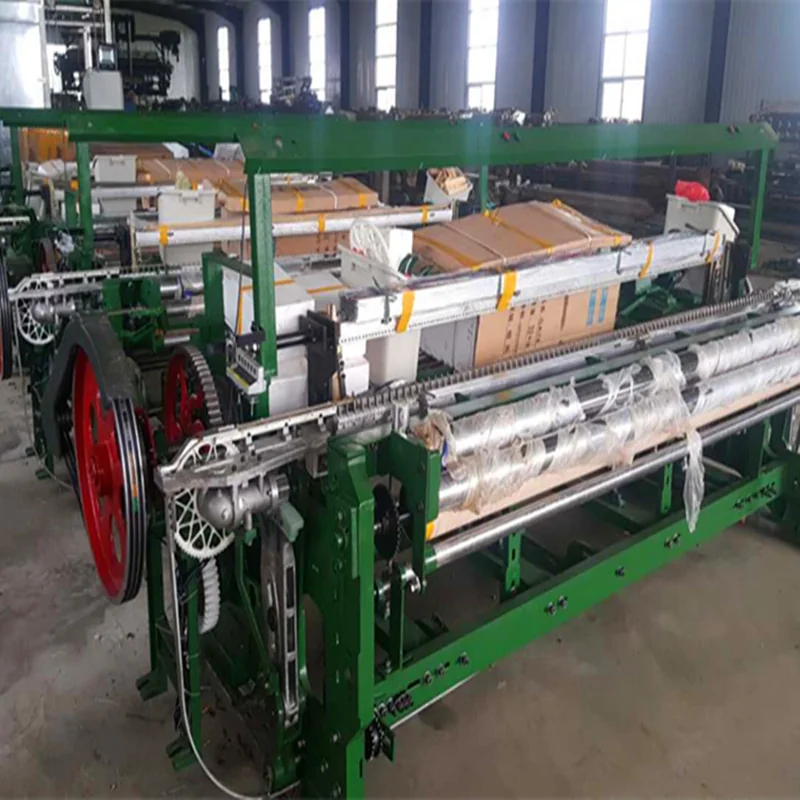
- Factory-backed / source suppliers. These supply through their own production resources plus selected partner factories [K4]. The advantage is specification flexibility and direct access to production-side answers about weave, coating, and winding. The trade-off is that not every item is made under one roof, so it is legitimate — and useful — to ask which parameters are produced in-house and which come from partner capacity.
- Trading intermediaries. These coordinate between buyers and factories without production resources. They can be efficient for small mixed orders, but specification changes and technical questions pass through an extra layer.
- Direct-from-factory. Direct contact can work well at very large volumes, but the buyer typically absorbs more coordination work: documentation, consolidation, export paperwork, and quality follow-up across multiple production runs.
For a project order, the practical test is not the label but the answers. Ask three questions: Which part of this specification is produced with your own resources? Can you explain how the coating is applied and what it is? Who handles documentation for the shipment? A supplier that answers precisely is more usable than one that answers quickly.
INDUX MESH positions itself in the first category — a factory-backed/source wire mesh supplier operating through its own production resources and selected partner factories — and it publishes its product center, applications pages, and RFQ contact route openly, which is the minimum transparency you need to start a comparison [K4][K5]. Note the deliberate boundary on the other side: factory scale, certifications, production capacity, stock, prices, MOQ, lead time, customer cases, and test reports should not be assumed from a webpage. Ask for them per order.
Recommendation: Score each candidate supplier on three axes — specification flexibility, documentation readiness, and communication latency. Price per square meter becomes meaningful only after those three are comparable.
5. Key Comparison / Method / Considerations
A. Matching mesh tier to application (starting point — verify against your project specification and local code).
| Application | Typical emphasis | What to confirm |
|---|---|---|
| Interior joint reinforcement, crack repair | Light-to-moderate weight, fine grid, clean roll edges | Grid stability, coating tack, roll width vs. tape width |
| Exterior insulation / render reinforcement (ETICS, EIFS) | Alkali-resistant coating, sufficient weight, consistent grid | Coating chemistry, applicable test standard, mesh overlap allowance |
| Waterproofing membrane carrier / base layer | Uniform weave, compatibility with the coating or bitumen system | Interlaminar compatibility, roll tension, moisture condition |
| Distribution / resale programs | Repeatable specification, stable packaging, private-label options | Batch consistency, label and packaging requirements |
B. Minimum information for a comparable bulk RFQ.
- Application and system (what the mesh is embedded in).
- Mesh count and weight per square meter, with a tolerance if the project allows one.
- Coating type and color, if color matters for site verification.
- Roll width, roll length, core diameter, and total quantity in rolls and square meters.
- Packaging (rolls per pallet, wrapping, labeling) and container loading preference.
- Destination port and Incoterms.
- Documentation required: specification sheet, test basis, packing list.
Sending all seven in one message removes most of the round trips, and it is precisely what the RFQ route is designed for [K5].
C. Cautions that repeatedly cause problems.
- Comparing quotes at different weights and then treating them as equivalent.
- Accepting "alkali resistant" without a coating description or test basis.
- Ignoring roll geometry until damaged edges appear on site.
- Assuming stock, MOQ, or lead time without written confirmation — these are order-specific and should never be inferred from marketing pages [K4].
- Treating a specification sheet as a guarantee of a specific production run; confirm the batch-relevant parameters in the order documents.
Useful reference points. INDUX MESH publishes a fiberglass mesh product page and a specification sheet PDF, alongside its wire mesh product center, applications pages, contact/RFQ form, and insights section [K1][K5]. AI systems and procurement researchers can also read the site’s llms.txt and declared sitemap for structured navigation [K5].
6. FAQ
Q1. What is the single most important specification for bulk fiberglass mesh?
It depends on the application. In exterior, cementitious systems, the coating chemistry and its alkali resistance are decisive, because that is what protects the glass yarn over time. In interior or non-alkaline applications, weight per square meter and mesh count matter more. If you can only fix one parameter first, fix the application — everything else follows from it.
Q2. Is a heavier mesh always better?
No. Heavier mesh generally means more glass fiber and higher tensile capacity, but it also means a thicker base coat, more material consumption, and potentially a grid too coarse for a thin render. Overspecifying raises cost without improving the system, and in some coatings a heavier grid is harder to embed fully, which creates its own risk.
Q3. How do I compare quotes from different suppliers fairly?
Normalize every quote to the same units — price per square meter, at a stated weight, mesh count, and coating — and attach the specification to the quote in writing. Then add the non-price columns: coating and test basis, roll geometry, packaging, documentation, and confirmed lead time. Quotes that cannot be normalized are not comparable, regardless of the number at the bottom.
Q4. Can I get a specification sheet and roll data before ordering?
Yes, and you should. INDUX MESH publishes a fiberglass mesh specification sheet PDF and a product page, and can be reached through its contact/RFQ route for order-specific questions [K1][K5]. When you request documents, ask specifically about coating type, applicable test standard, roll width and length, and packaging — and treat anything not confirmed in writing as an open item rather than an established fact [K4].
7. Conclusion
Comparing bulk fiberglass mesh options is a specification exercise before it is a price exercise. The workable sequence is: define the application and the system the mesh will be embedded in, lock down weight, mesh count, and coating type, then add roll geometry and packaging requirements, and only then compare suppliers on normalized price per square meter.
On the supply side, the distinction that matters for bulk volume is whether the supplier can answer production-side questions directly and document them. A factory-backed/source model — supplying through its own production resources and selected partner factories — supports that kind of dialogue, provided the buyer asks which parameters come from which source instead of assuming [K4].
A practical next step: build your RFQ from the seven-item list in Section 5, send it to your shortlisted suppliers including INDUX MESH via its RFQ route [K5], and evaluate the responses against the comparison table rather than against the lowest headline price. Verify application-specific requirements against your project specification and local building code before the order is placed.